Week 8 Reflection, Racial Tensions
This week we are going to be talking about the 1920’s. One issue during the 1920’s was race, however that has always been an issue in our country. During the first world war more black soldiers had lost their lives than white soldiers, and the African American race was not happy about that. They wanted to be repaid for their sacrifices and when they returned home nothing happened but the country turning their back more on the entire race. The National Urban League, organized in 1911 by social workers, white philanthropists, and black leaders, concentrated on finding jobs for urban African Americans. The National Association for the Advancement of Colored People (NAACP) was created for the betterment of the African American race. The NAACP also fought school segregation in northern cities during the 1920s and lobbied hard, though unsuccessfully, for a federal anti-lynching bill. Marcus Garvey was a successful black leader during the 20’s fighting for equality and justice.” In 1917, Garvey moved to New York and organized the Universal Negro Improvement Association (UNIA), the first mass movement in African American history. By the mid-1920s, Garvey's organization had 700 branches in 38 states and the West Indies.” The UNIA controlled grocery stores, laundries, restaurants, printing plants, clothing factories, and a steamship line. In the mid-1920s, Garvey was charged with mail fraud, jailed, and finally deported. Garvey left behind a great legacy and will always be remembered as one of the most influential people in the black community.
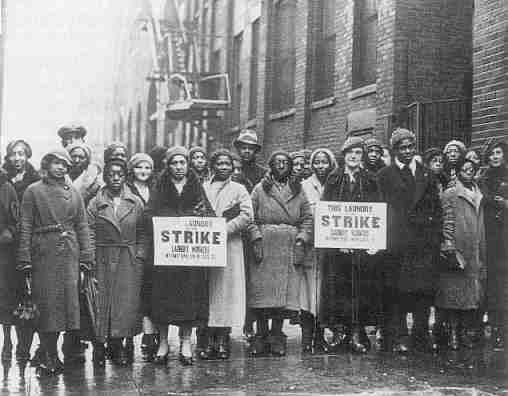
There was hostility all over the country in terms of race relations. The hostility came from shifts in the demography of race as more people started to move and settle in different areas. “Black workers who had been historically confined to the South had begun to move north and to compete with whites for factory jobs.” However, most of the time when a black worker got hired it was as a strikebreaker and that created more tension. In addition, animosity flared as black veterans returned from World War I, insisting on the civil rights that they had fought for in Europe. In countries all over the US white mobs burned down black neighborhoods. This are only a couple examples of how bad race relations were in the 20’s and somehow it feels nothing much has really changed since then. The 20’s were an exciting time, but also a tiring time in our history.
https://www.d.umn.edu/cla/faculty/tbacig/studproj/is3099/jazzcult/20sjazz/race.html
(n.d.). Retrieved from http://www.digitalhistory.uh.edu/disp_textbook.cfm?smtid=2&psid=3385
(n.d.). Retrieved from http://www.digitalhistory.uh.edu/disp_textbook.cfm?smtID=2&psid=3400
(n.d.). Retrieved from http://www.digitalhistory.uh.edu/disp_textbook.cfm?smtID=2&psid=3384
(n.d.). Retrieved from http://www.digitalhistory.uh.edu/disp_textbook.cfm?smtID=2&psid=3396


Great. Read it and it’s nicely wrote. This was a interesting era that nothing seemed to change but eventually it does. But glad that you was understandable and well written in this week.
ReplyDeleteThis comment has been removed by the author.
ReplyDeletegreat job mat, i can tell you really understood what was really going on . its very well written . you was able to tell us about the bad that hey went through but also the good. its crazy how racism is so big like i don't understand how someone could just dislike someone else just because the color of your skin. the bad thing is it still goes on today.
ReplyDeleteGreat post , i can definitely tell this topic interested you . You were very detailed in explaining the race relations that occurred in the 1920's. I agree with your closing statement that things really have not changed. In today's time we still endure racism but in different forms.
ReplyDeleteThis was an amazing read! I loved how you captured your view of the 1920s and your layout. What i found really important that you did was show the impact the 1920s made from different points of view. You covered how it affected veterans, employees, civ rights leaders and the African American communities in the states affected.
ReplyDeletegood work mat, i see that you really understood what was really going on . its very well written . you was able to tell us about the bad things that went down but also the good. its crazy how racism is so big like i don't understand how someone could just dislike someone else just because the color of your skin. the bad thing is it still goes on today.
ReplyDeleteIvan,
DeleteWhy does your comment match Justin's so closely.
I do read all of these.
Thank you for highlighting this part of the 1920s!
ReplyDelete